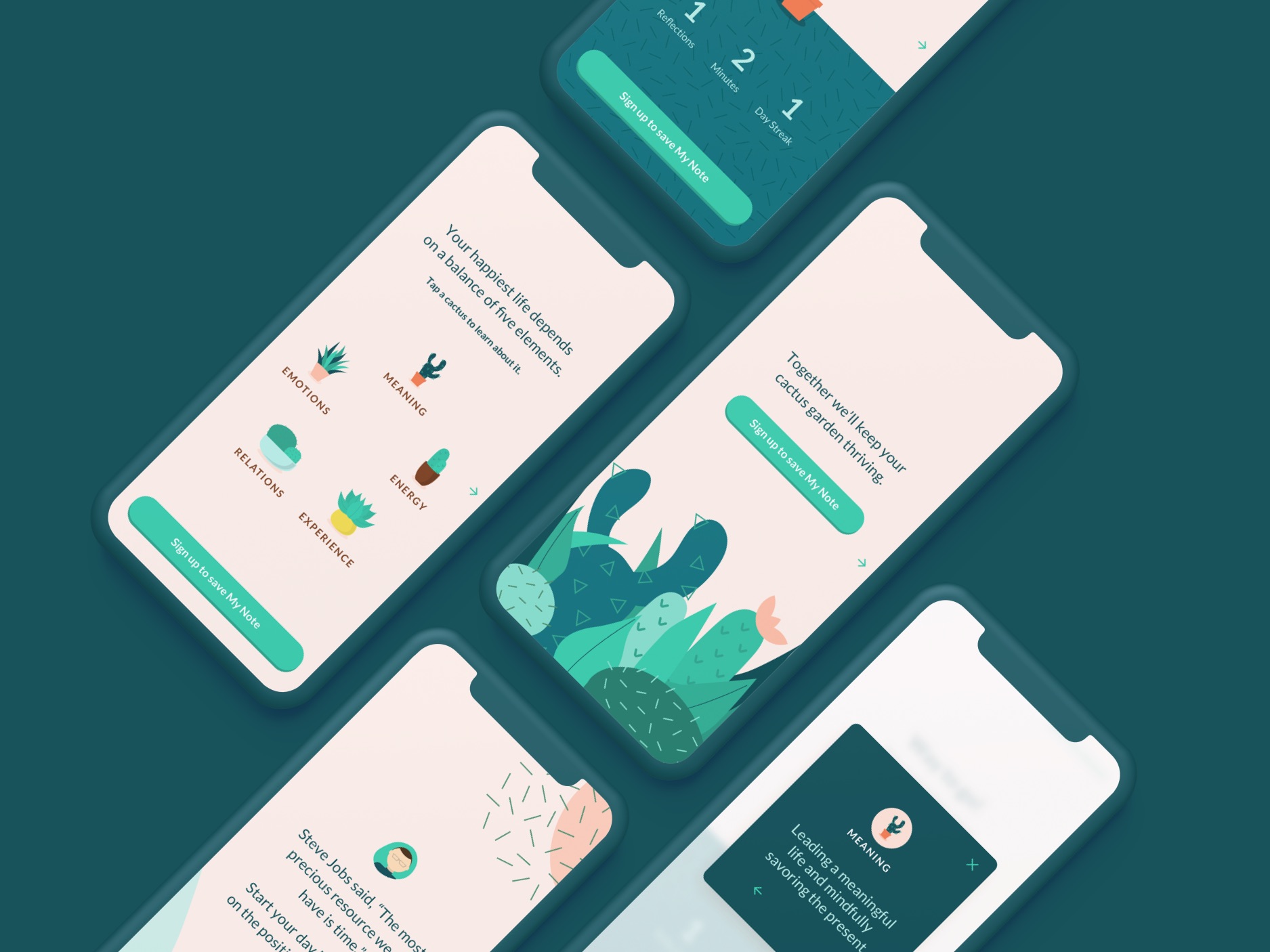
Cactus

A minute of mindfulness in a daily app

May 2019 • View Site

Cactus was a daily journal to help people boost their self-awareness and discover what brought them happiness. When users journaled their thoughts, Cactus gave them personalized insights.

Mission

Our mission was to make a daily habit out of self-care that felt easy, yet worthwhile and valuable enough to do every day. Our hope was that this daily practice would start to light up your life in ways that were meaningful to you.

My role

There were four of us. I focused on product, ux, design, illustrations, micro-copy, front-end development, and interactions. All of us contributed however we could; we never worked alone on anything.

Mock of Cactus

Users

Cactus targeted young professionals who felt like they didn't have time for themselves. These were the folks who knew gratitude was beneficial, they'd read that self-care was important, yet they hadn't had success in creating a daily habit of it.

Early on

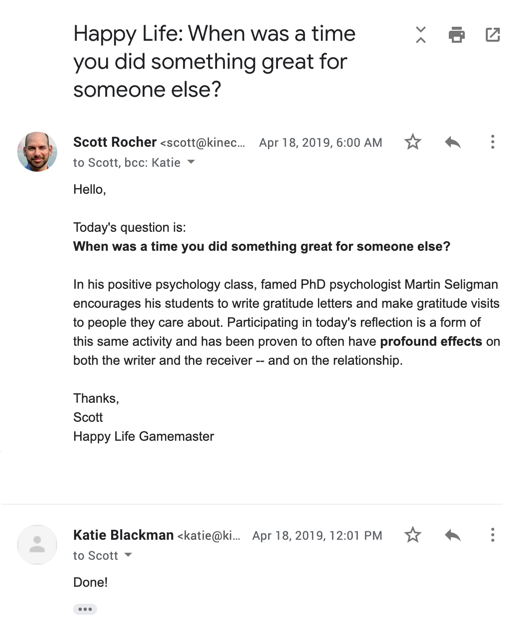
Cactus began as a plaintext email, sent to 50 of our friends and family every day. At the time, the only way for users to look back on their reflections was to filter their inbox or wherever they were keeping their daily reflections. (I kept mine in Google Keep.) This wasn’t very inspiring. Our users started asking, "Who's reading my emails?" and "How secure is this?" Reflecting on those questions, we created these goals:

  • Created a way to capture new emails (users) so that we could grow
  • Captured reflections securely for each day's prompt and made users feel secure
  • Had a place to look back at reflections so that users saw the value they were getting
  • And...created a brand

"The Cactus team is one of the best founding product teams I've ever seen and I've seen thousands of them. Their product and product vision around mindfulness is spot on [in a] a rapidly growing market...They listen, they learn, they decide and they iterate."

Kirk Holland

Brand

Exercises

Ryan, our CEO, sent me this article, which was all about Netflix's brand process led by Gibson Biddle. Using that as our guide, we took a few days to go through these exercises as a team:

  • Positioning Model: What is it? What are the customer benefits? What is its personality?
  • Branding Pyramid: Something bigger—the bold 10-year vision; emotional benefits—how you'll be remembered
  • Concept Summary: Take previous work and put it into a paragraph written for a 6th grader.

Research

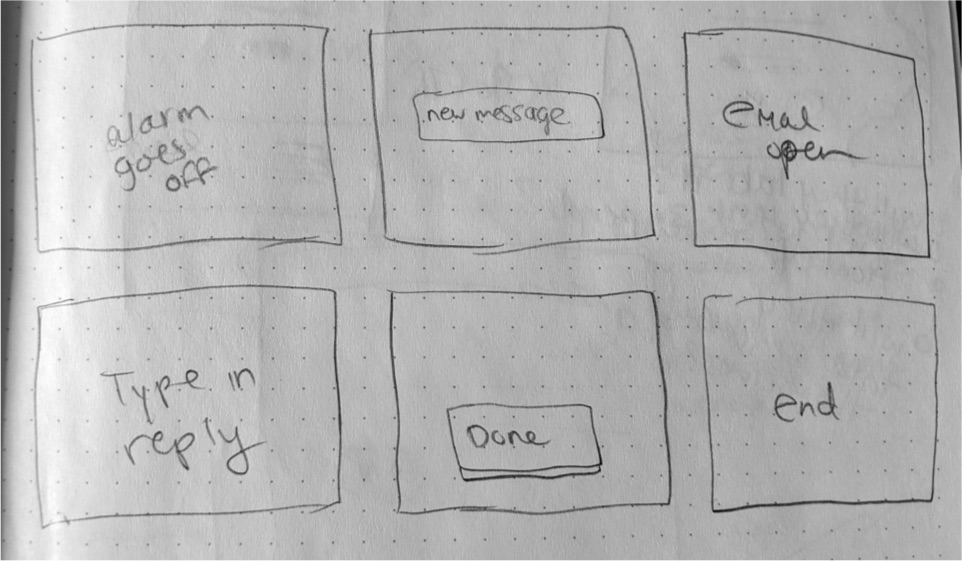
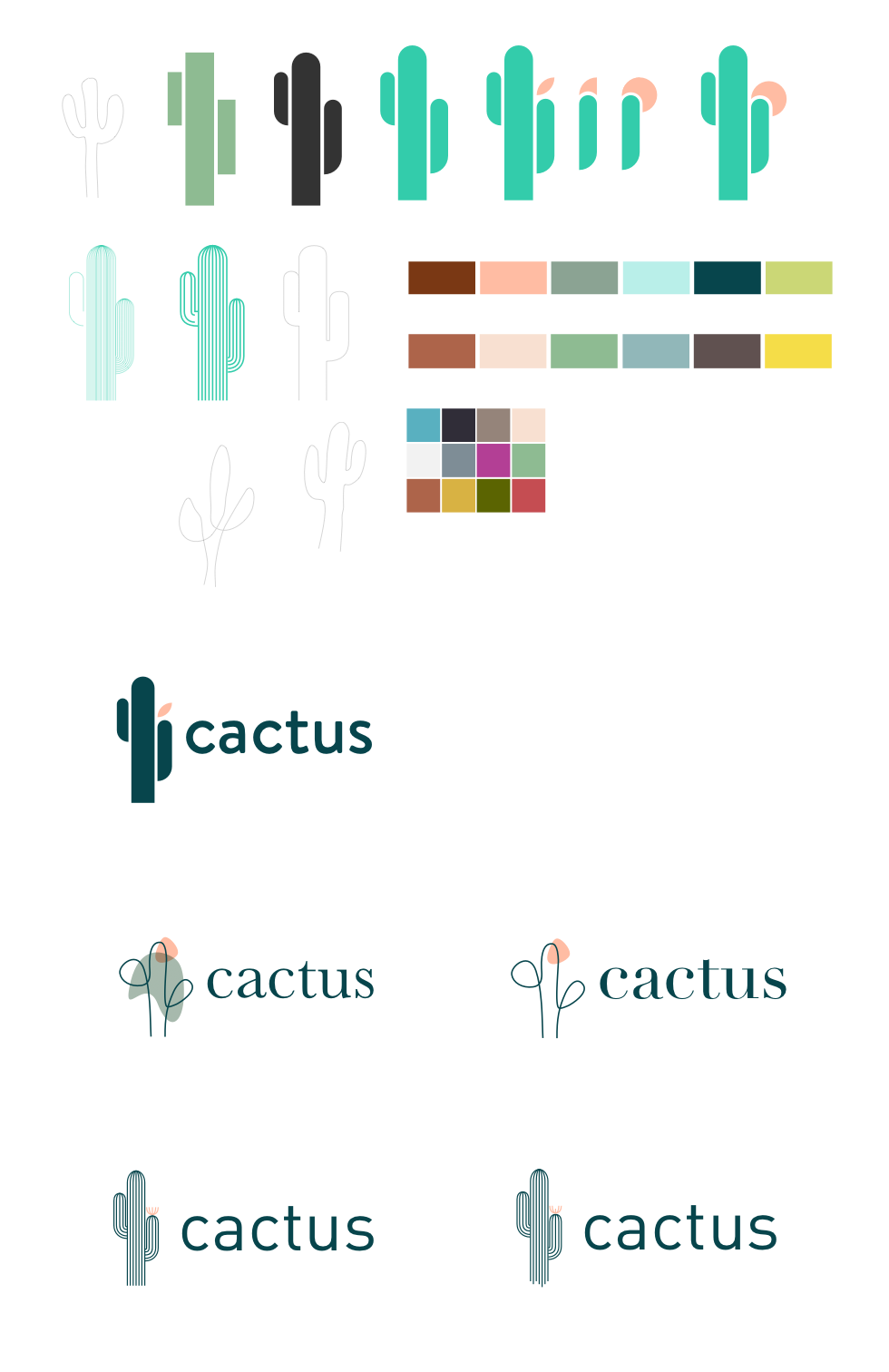
I sketched out a few ideas that were in my mind, then did some initial research on cacti to make sure I wasn't messing up a key detail. I learned a lot of interesting cactus facts, then perused the image search for inspiration. Picular was a cool site that helped pick out colors based on a keyword. I checked it quick for subject-specific colors.

Design

I sketched some cactus-looking shapes and used rectangles to see how little I needed to create the cactus shape. In my mind, the best logos were quite simple. I created a few concepts for the first round and shared with the team. We discussed pros and cons of each of them. It didn't take long before we landed on our final design.

You can read even more details about my process on Medium.

Web

Sketches & collaboration

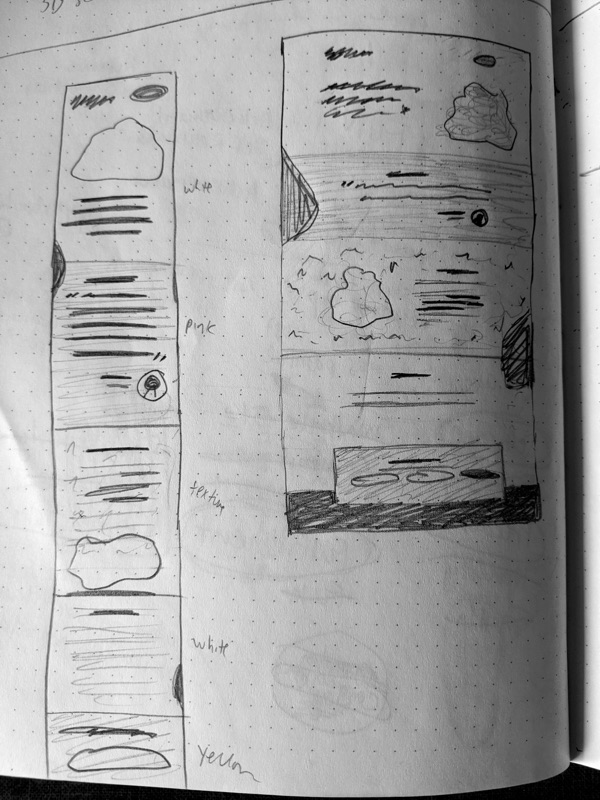
Because we were a remote team, our whiteboard sessions were a little different. If we wanted to do a group brainstorm, we sketched on our own, then shared photos of our sketches with each other while we were all on a group call. We took turns explaining our thinking, then I was able to consolidate the strongest ideas into new sketches or wireframes.

We were constantly collaborating over Slack and Hangouts when needed. We never hesitated to jump on the phone if a conversation over Slack had gone on long enough.

Design

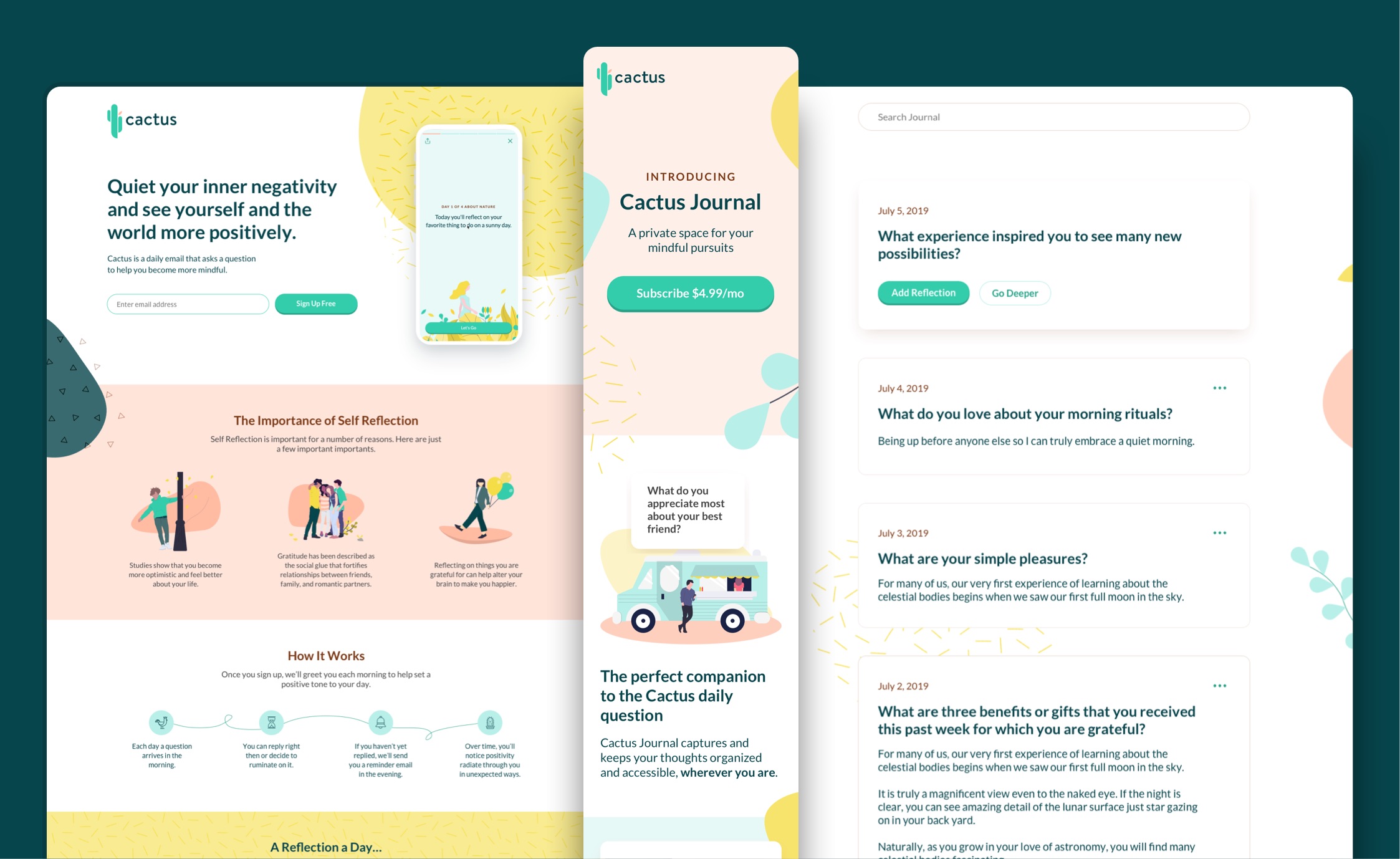
After doing the brand exercises, design came much quicker. I went from sketches to mocks easily. We used illustrations from undraw.co: free, fast, and playful-looking, which is what we were after.

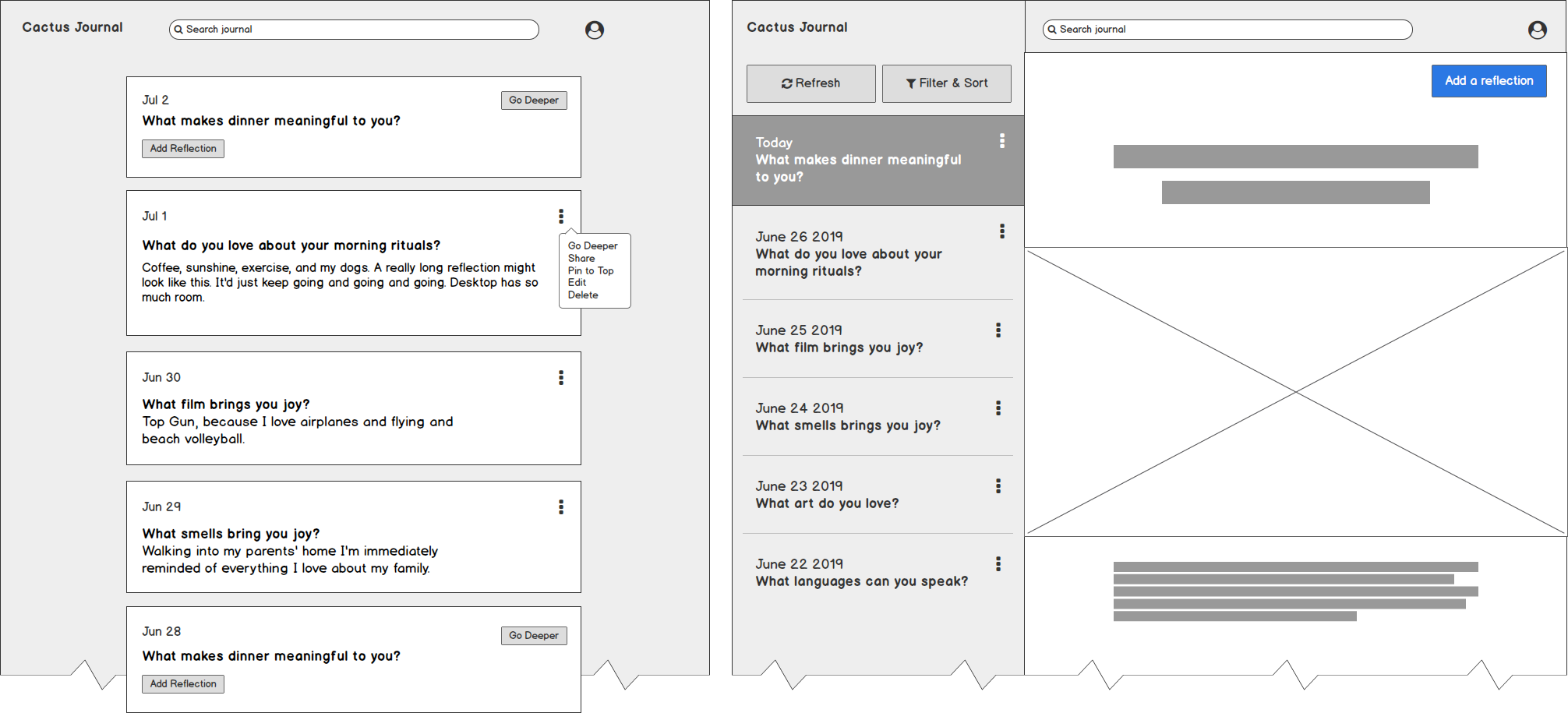
For the goal of capturing the daily reflection, I had a couple different ideas at least for wider screens. We could either (1) go with a stream of Q&A. Or we could (2) go the route of an inbox, where you could easily bounce around questions and see what you previously reflected.

I gathered the team, presented my wireframes and we all decided the stream felt better, because it was cleaner to look at. And, the further we could get away from the slog of an email inbox, the better.

Outcome

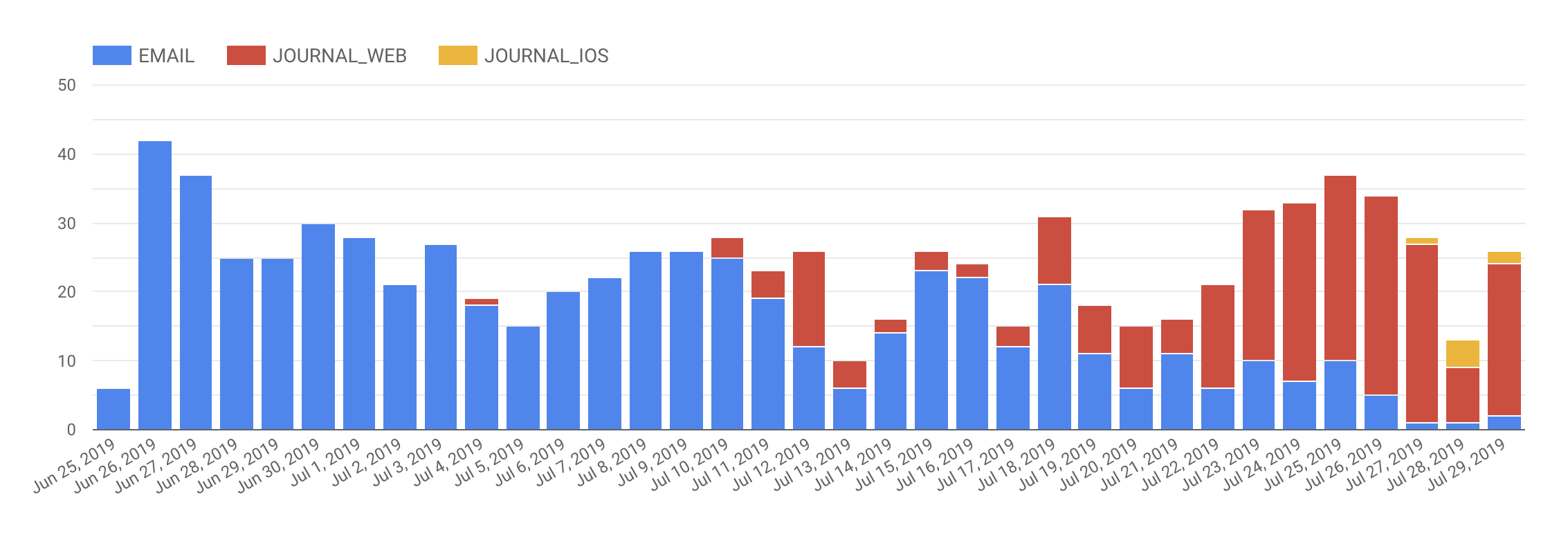
Our users immediately started adopting the journal as their primary way to reflect. So we pushed forward.

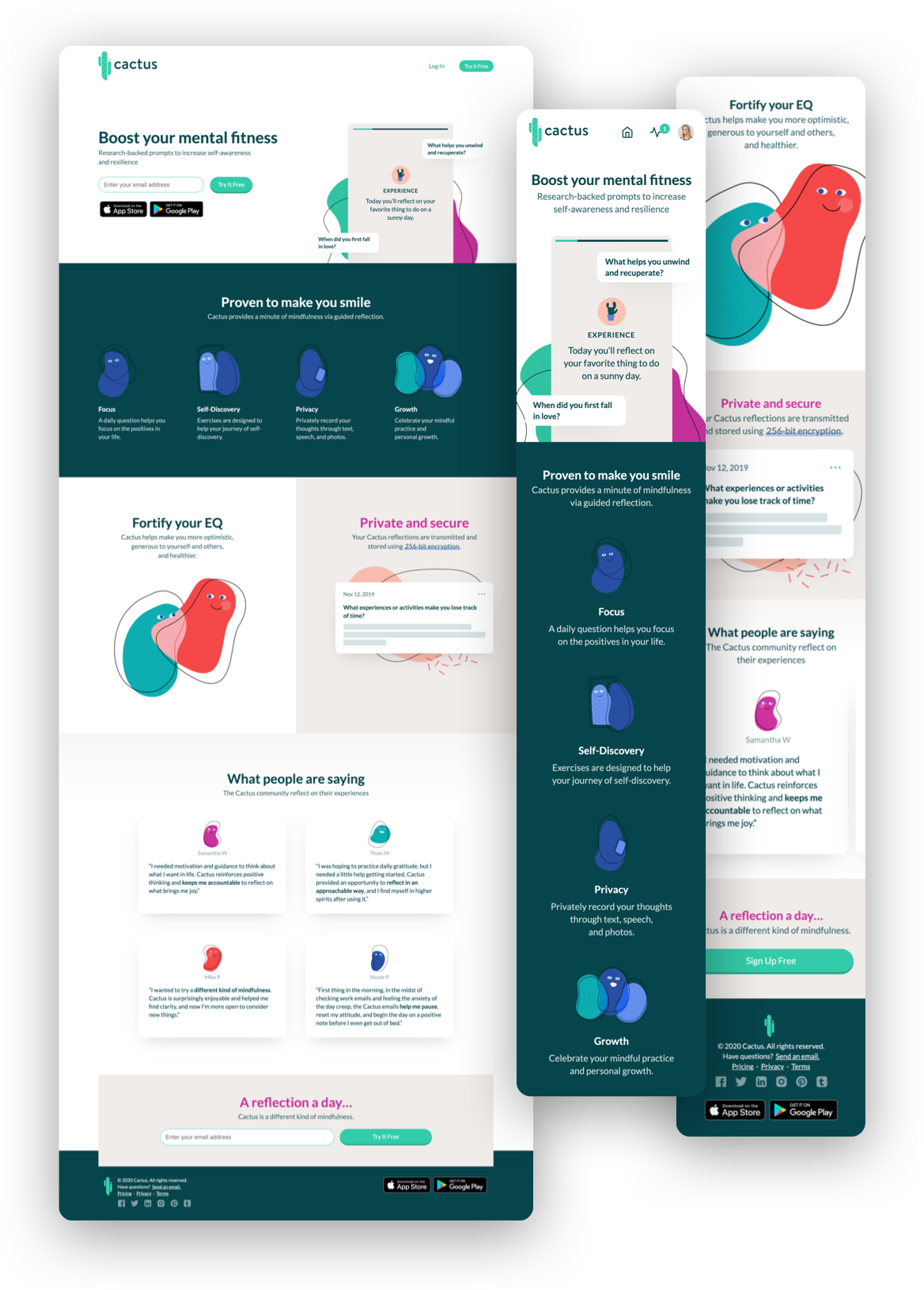
Mock of the first homepage iteration

Growth

iOS

We started to hear from prospective users, "I couldn't find you on the app store" or "Let me know when your app is ready." We knew we would eventually build an iOS app. If we wanted to grow, now seemed like a good time to do so.

Virality

While our CTO, Neil, was working on the app, Scott, our Head of Product, and I teamed up on a couple features to help build virality:

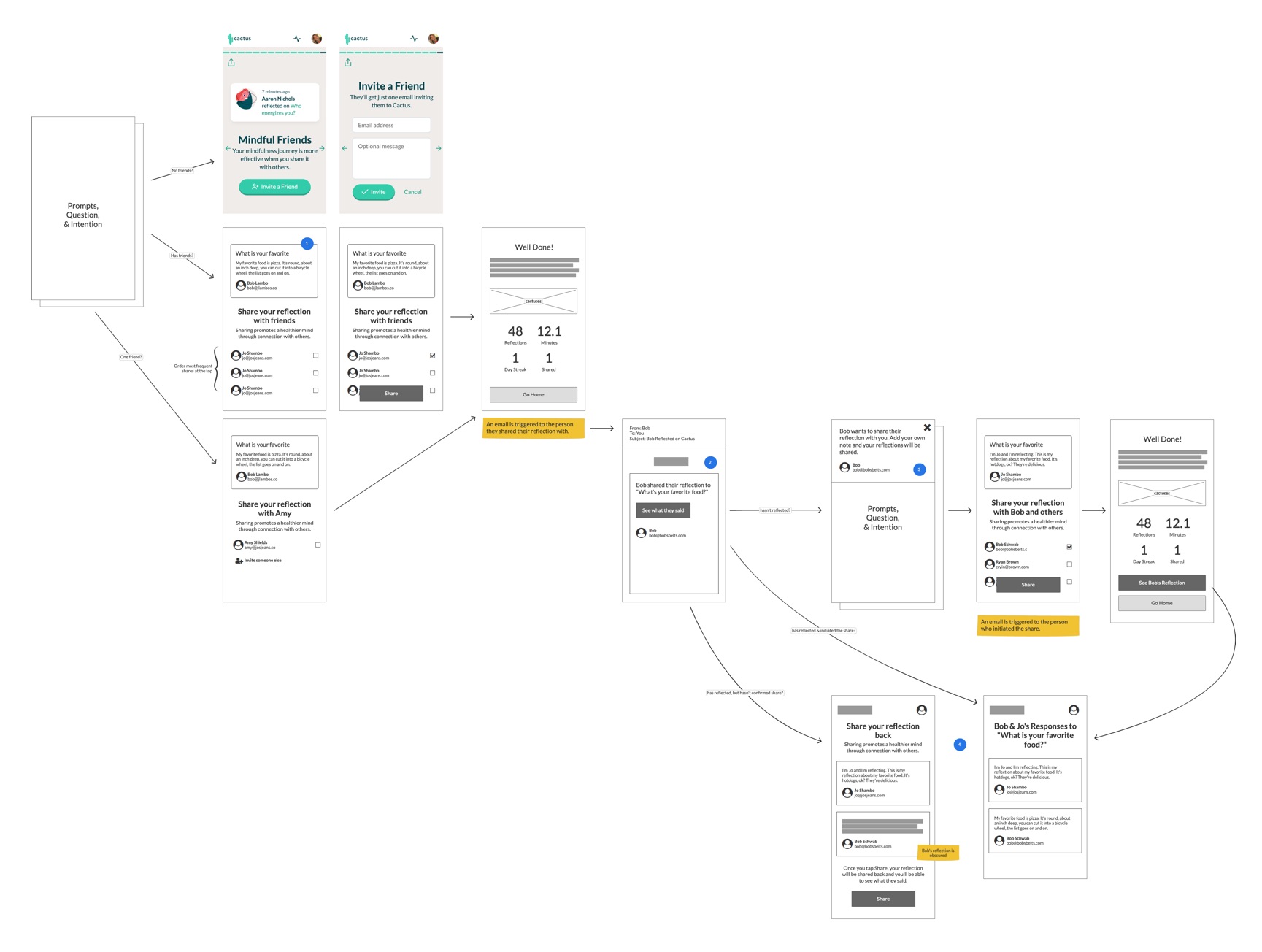
  • Sharing: We made sharing journal notes a step in the daily flow, so that it would feel more natural to share what you wrote.
  • Trading: We did some iterations on trading notes, where users could read each other's notes only after both had been shared.
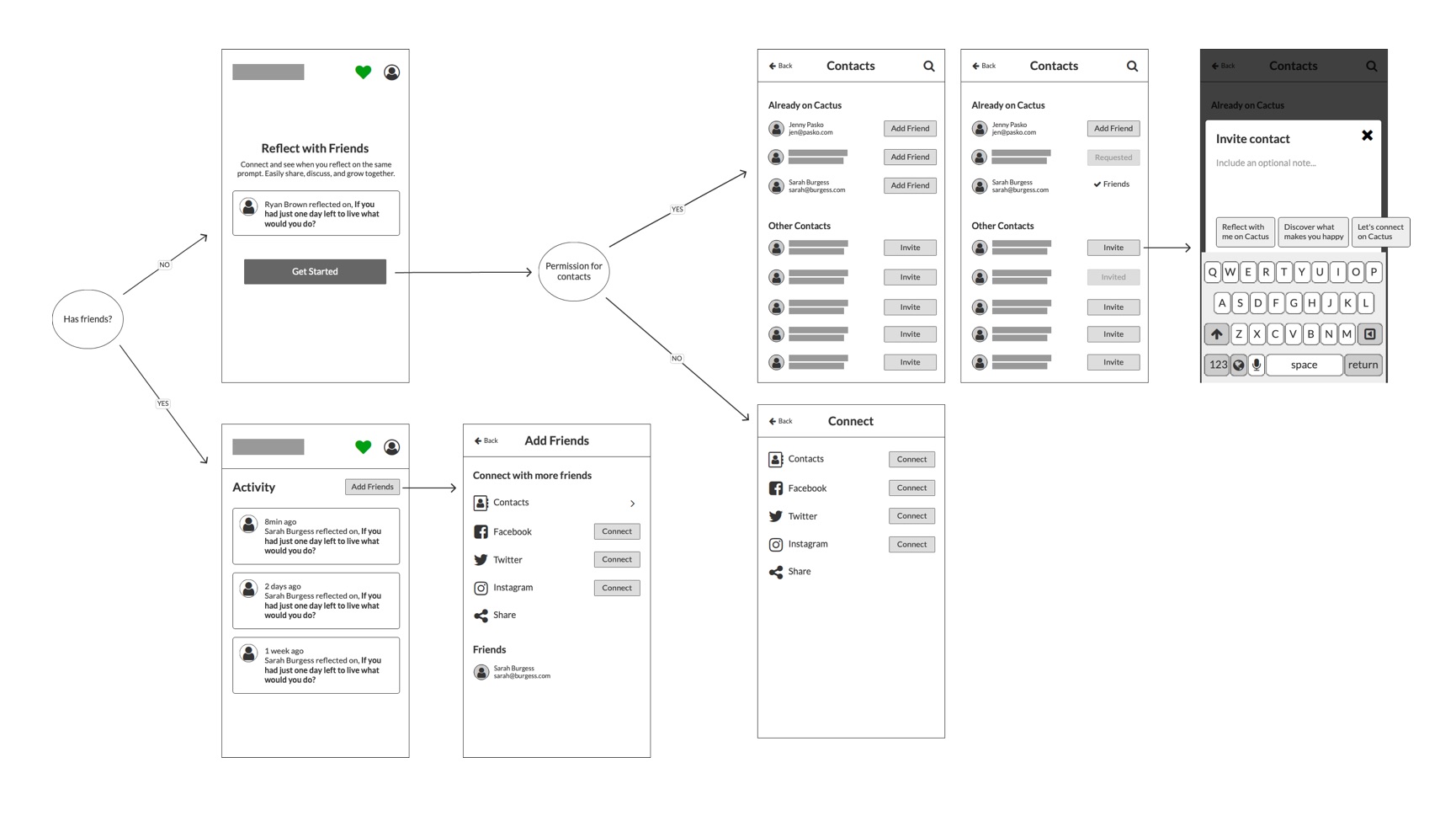
  • Friends: We launched friends + an activity feed that showed when your friends reflected to give users the feeling that they had a community at Cactus.

Though each of these experiments were used by our members, none of the features really moved the needle. Users weren't comfortable sharing their personal journal entries with others.

Product Hunt

Though our virality tests didn't pan out, appearing on Product Hunt did. Cactus became the #1 product of the day in October 2019 beating out Twitter for Mac. This resulted in huge growth for us.

Cactus - Boost your mood and emotional intelligence in one minute | Product Hunt Embed
Trade notes wireflow Friends wireflow
Dark mode on iOS

Dark mode on iOS

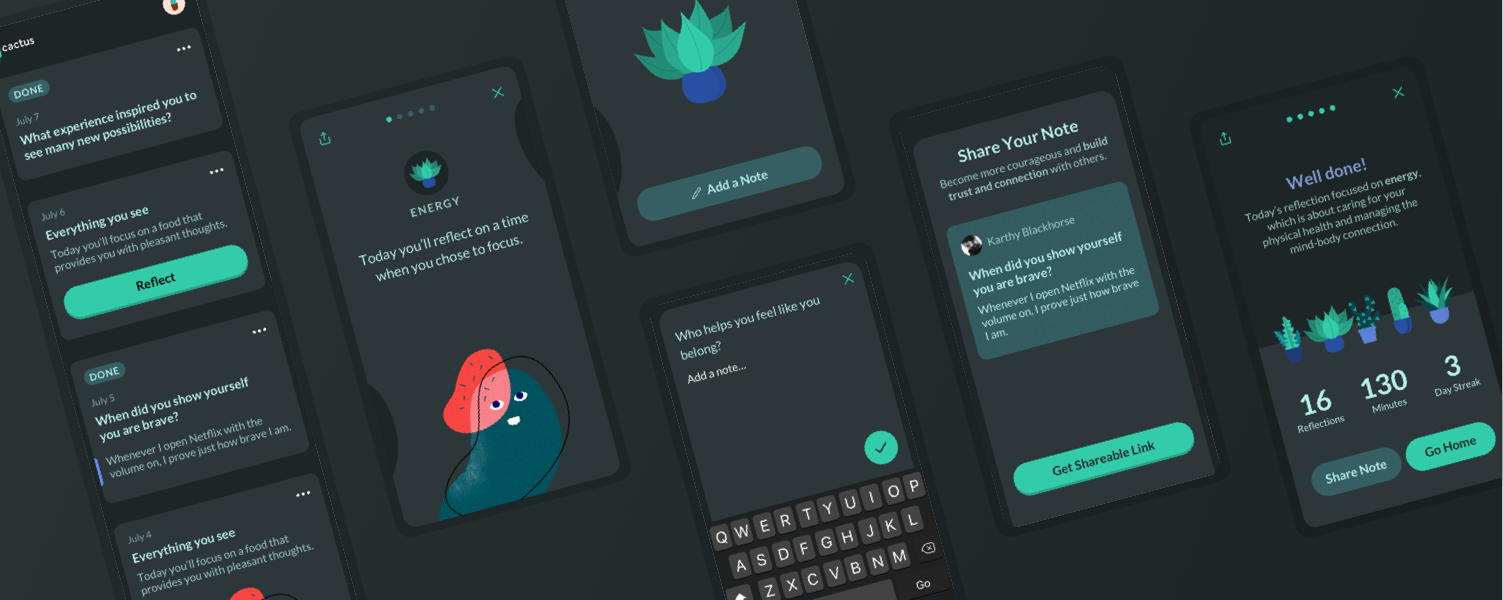
Once we launched our iOS app, we kept going. We did a few bug fixes, and then we were ready to figure out dark mode, which was gaining traction since it was announced at the Apple Keynote earlier in the year. Neither Neil or I had experience here, but as with most things, we felt pretty confident we could figure it out.

I did some research about best practices, and checked with Apple, Google, and my favorite designers. Implementing the design was actually much easier than expected and I was happy to jump into Xcode to assist Neil.

After it launched, some of our users preferred it over the original theme.

"What can I say? This app got me back into mindfulness. I used to just use Day One here and there, but having a daily prompt (based in science) really compels me to make this part of my health..."

— iOS app review

Illustrations

The next thing we wanted to tackle was looping back to the design. When we launched, we grabbed illustrations off undraw.co for free. We didn't realize how much these would become a part of our daily product. Every prompt, every day, had an illustration.

The problem was, they were becoming more widespread, used on several websites all over the place. We even heard from users about them. They were great as a first attempt at contributing to our playful brand. However, they weren't unique to Cactus, and every other part of Cactus was unique. We were hungry for that feeling of authenticity in our illustrations too.

So we spoke with a few illustrators whose work we had been admiring. And we would have loved to bring any one of them on, but it just wasn't in the budget. So I took a stab at it. What resulted was the start of a large family of blobs.

Bunch o blobs

Where we landed

We continued to work on Cactus by giving more to the user. We released a premium subscription to help with these efforts. Later features included insights, which revealed words that came up often for users in their written reflections. We also worked on a core values assessment so that we could tailor the prompts to what was important to the user.

Go to the app store Go to the app store

"In my years working with Katie, she has been incredibly adaptable to the changes that the organization has thrown our way, always finding a way to add value to the team, even when most everyone is shrugging their shoulders. She is simply beyond reliable."

Ryan Brown